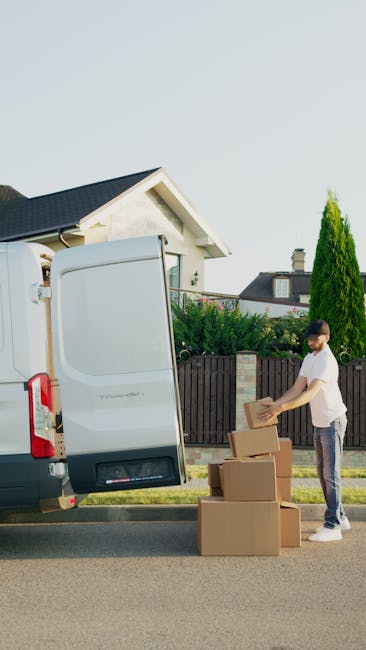
Hampton Wick Kingston removals man with van tight access guide
If you are moving in or around Hampton Wick and Kingston, chances are the hardest part is not the packing. It is the access. Narrow roads, shared entrances, basement steps, limited parking, awkward turns, and that one hallway that somehow shrinks when a sofa appears all make a simple move feel far less simple. This Hampton Wick Kingston removals man with van tight access guide is here to help you plan the move properly, avoid nasty surprises on the day, and decide whether a man with a van is the right fit for your property. Truth be told, the smoother jobs usually come down to the planning done before the van even arrives.
In this guide, you will learn how tight-access removals work, what to check before booking, how to protect your furniture and your nerves, and when a larger team or different vehicle makes more sense. You will also find a practical checklist, a comparison table, and answers to the questions people actually ask when moving in compact Kingston and Hampton Wick streets.
Table of Contents
- Why Hampton Wick Kingston removals man with van tight access guide Matters
- How Hampton Wick Kingston removals man with van tight access guide Works
- Key Benefits and Practical Advantages
- Who This Is For and When It Makes Sense
- Step-by-Step Guidance
- Expert Tips for Better Results
- Common Mistakes to Avoid
- Tools, Resources and Recommendations
- Law, Compliance, Standards, or Best Practice
- Options, Methods, or Comparison Table
- Case Study or Real-World Example
- Practical Checklist
- Conclusion
- Frequently Asked Questions
Why Hampton Wick Kingston removals man with van tight access guide Matters
Moving house is stressful enough without discovering that the van cannot get close to the front door. In Hampton Wick and Kingston, that is not an unusual problem at all. You may be dealing with terraced streets, busy parking bays, shared drives, flats above shops, riverside access, or older properties with stairwells that were never designed for modern furniture. A tight-access move changes everything: the size of vehicle you need, the time on site, the number of trips, the carrying distance, and sometimes even the route in and out of the property.
That is why a man with van service can be such a smart option. It is flexible, usually quicker to arrange, and often better suited to smaller or medium moves where access is awkward but the overall volume is manageable. But let's be fair, a van alone does not solve every access issue. You still need a plan for parking, lifting, route-finding, and whether the job can be done safely without blocking the street or damaging your belongings.
For local moves, the difference between a good day and a chaotic one often comes down to a few simple questions: Can the van stop legally and safely? Can large items turn through the hallway? Are there stairs, lift restrictions, or time limits? If you answer those honestly before moving day, you save time, money, and a fair bit of anxiety.
For related local planning, it can also help to understand nearby service options such as man and van removals, which may suit smaller loads or short-distance moves, and house removals if the property is larger or the access is more demanding than it first appears.
How Hampton Wick Kingston removals man with van tight access guide Works
A tight-access removal is basically a move where space, parking, or entry points create extra handling challenges. Instead of a straightforward driveway-to-front-door load, you might have a van parked round the corner, a long carry from the loading point, or furniture that has to be taken down narrow stairs and through a shared entrance. The man with van approach is designed to adapt to that sort of real-world messiness. And yes, most moves have a bit of messiness.
Here is the general flow. First, you describe the property and the access honestly. That includes floor level, lift size, street width, parking availability, any height restrictions, and whether bulky items are involved. Then the mover estimates the right vehicle size, labour needs, and time allowance. On the day, the mover will usually assess the access again, decide the safest route, and load items in a sequence that protects fragile goods and avoids needless carrying back and forth.
In tighter parts of Kingston, that planning stage matters more than people think. A mover may need to use furniture blankets, trolleys, straps, or smaller item runs to get things out without scraping walls or jamming doorframes. You do not want to be improvising this while carrying a wardrobe. Nobody does.
When the job is well planned, a man with van service can feel surprisingly smooth. The van may be parked a short distance away, but the move remains efficient because the route, packing order, and access issues were thought through in advance. That is the difference between a job that feels controlled and one that feels like a puzzle missing three pieces.
Key Benefits and Practical Advantages
A good tight-access removals plan brings more than convenience. It reduces risk, avoids delays, and makes the whole move feel more predictable. That matters even for smaller relocations, because awkward access can quietly add hours if nobody has accounted for it.
- Better fit for compact properties: Ideal for flats, maisonettes, mews properties, and homes with limited parking or narrow entryways.
- More flexible timing: A man with van service can often work around shorter notice periods and more precise arrival windows.
- Lower pressure for small loads: You are not paying for a massive vehicle if a smaller, better-placed van does the job more efficiently.
- Safer handling of awkward items: Experienced movers are used to fridges, beds, wardrobes, and the sort of sofa that seems to have grown overnight.
- Less disruption to neighbours and traffic: A sensible loading plan helps avoid blocked drives, annoyed neighbours, and hurried carrying.
There is also a practical emotional benefit that people underestimate. When you know the access has been properly assessed, the move feels less like a gamble. You can focus on the move itself rather than worrying whether the van will be left circling the block while the clocks tick away.
If you are comparing services, a local guide to removals in Hampton Wick can help you see how different move types fit different property layouts, while Kingston removals information is useful if your move crosses between nearby streets or neighbourhoods.
Who This Is For and When It Makes Sense
This kind of service is a strong fit if your move is small to medium in size but the access is tricky. Think one-bedroom flats, studio moves, student relocations, furniture collections, partial home moves, or downsizing jobs where the route matters as much as the load.
It also makes sense if you are moving from or into any of these scenarios:
- top-floor flats with narrow staircases
- basement or lower-ground properties
- roads with limited stopping space
- shared entrances or coded doors
- properties with low trees, tight corners, or restricted turning space
- small businesses or home offices with a few bulky items
On the other hand, if you have a full family house with lots of furniture, several fragile items, and difficult access at both ends, a bigger removal team may be a better fit. That is not a failure. It is just matching the job to the method.
People sometimes assume a man with van is only for the smallest jobs. Not really. In the right hands, it can handle more than you might expect. The key is knowing the limits. A tightly packed load with poor access is one thing; a full-scale house move with no parking and multiple flights of stairs is another.
To explore broader support options, it can be useful to look at single item removals for one-off bulky pieces, or furniture assembly if you want help putting items back together once they arrive. That small extra service can save a lot of faffing about, especially after a long day.
Step-by-Step Guidance
Here is the practical version. If you want your move to go smoothly in tight-access conditions, work through the process below in order.
- Measure the awkward bits first. Check stair width, doorway width, ceiling height on landings, and the size of any item that cannot be bent or disassembled easily.
- Describe the access honestly. Do not say the van can park outside if it can only stop ten doors away. That little detail matters more than people think.
- List the heavy and bulky items. Sofas, wardrobes, mattresses, appliances, bookcases, and desks need special handling.
- Confirm parking and stopping space. If the van must use a shared area or side street, make sure the mover knows in advance.
- Pack by carry order, not by room pride. Items needed first should be easy to reach. Keep essentials separate.
- Protect corners and surfaces. Use blankets, wraps, and cartons that are sturdy enough to survive a narrow stairwell shuffle.
- Keep walkways clear. Shoes, plant pots, bikes, and recycling bins have a habit of becoming trip hazards at exactly the wrong moment.
- Do a final route check before loading begins. One last look at the hallway, stairs, and door swing can prevent a lot of swearing. Quietly, of course.
A real-world example: a small flat move in Kingston might look simple on paper, but once you find there is no elevator, a tight communal hall, and the only legal stopping place is around the corner, the time estimate changes straight away. That is normal. Good movers adjust. Poor ones pretend the issue does not exist until they are already late.
Expert Tips for Better Results
These are the little things that make a big difference, especially in compact London streets where everyone seems to need the same parking space at the same time.
Be specific about your largest item
It is not enough to say "large sofa." Say whether it splits, whether the feet come off, and whether it has fragile fabric or a fixed frame. That allows the mover to bring the right protection and decide the best route.
Send photos if you can
A few clear photos of the entrance, stairs, street, and item sizes can remove a lot of uncertainty. A quick image of a narrow hallway often says more than five paragraphs. Handy, really.
Check height and turning space, not just width
People focus on doorway width, but turning angle is often the real issue. A bulky wardrobe may technically fit through a door yet still refuse to make the turn at the landing.
Use dismantling wisely
Some furniture is worth dismantling before the move. Some is not. If disassembly risks damaging the item or taking too long, a professional may prefer a careful carry instead.
Build in a buffer
Tight access almost always means more handling time. Plan a small buffer in case the van has to stop further away, if a lift is out of service, or if access is briefly blocked by a delivery vehicle or neighbour parking.
For added peace of mind, it can also help to review a local packing service if you are short on time, or flat removals support if you are moving in or out of an apartment-style property with limited access.
Expert summary: With tight-access removals, the goal is not simply to "make it fit." The goal is to move everything safely, in the right order, with the least carrying stress possible. Measure, describe, and plan early. That is what keeps the day calm.
Common Mistakes to Avoid
Most problems in tight-access removals are avoidable. The frustrating part is that they are usually the same mistakes, repeated by people who were otherwise being sensible.
- Underestimating carrying distance: A van parked a block away can add serious time and labour.
- Ignoring stair and doorway measurements: If a wardrobe cannot turn, the job slows down fast.
- Not warning about parking restrictions: A loading bay, permit zone, or time-limited bay can change the whole plan.
- Packing too late: Last-minute boxing often means fragile items are mixed in with heavier ones.
- Leaving bulky furniture assembled when it could be taken apart: Sometimes a few screws save a lot of grief.
- Forgetting neighbour or building access rules: Shared spaces may have lift bookings, noise limits, or entry codes.
One common slip-up is assuming the mover will "just manage" when the access is worse than expected. Maybe they can, maybe they cannot. But no decent operator likes being surprised by a locked gate, a parking ticket risk, or a staircase that feels like it was designed by someone with a grudge.
The safest approach is simple: tell the truth about access. It sounds basic, but honestly, it saves everyone a headache.
Tools, Resources and Recommendations
You do not need specialist kit for every move, but the right tools make tight-access work safer and less stressful. A sensible mover will usually bring some or all of the following depending on the job:
- removal blankets and protective wraps
- straps for securing awkward items in the van
- trolleys or sack trucks for heavier loads
- gloves with a secure grip
- floor and corner protection where needed
- basic tools for dismantling or reassembling simple furniture
- labels, tape, and marker pens for organised packing
From your side, a tape measure, a phone camera, and a simple room list are often enough to make an enormous difference. No fancy system required. Just clear information.
If you are comparing support for a move with a lot of packing or awkward furniture, the pages on storage solutions and office removals can also be useful if your move involves staged delivery, excess furniture, or business items that cannot all go in one trip. Sometimes the smartest move is not a single move at all.
Law, Compliance, Standards, or Best Practice
For removals in the UK, the main practical concern is safe, lawful operation rather than anything overly complicated. You do not need to become a parking expert overnight, but you do need to respect local access rules, loading restrictions, and building requirements. In places like Hampton Wick and Kingston, that often means paying attention to permit parking, yellow lines, time-restricted bays, and any building-specific instructions for shared entrances or lifts.
Good removals practice also means proper lifting, sensible load securing, and avoiding unsafe blockages. If a mover is working on a tight street, they should think about pedestrian safety, neighbour access, and keeping the loading process as tidy as possible. That is basic professionalism, really.
If you are in a managed block, check whether the building has booking rules for lifts, service entrances, or common areas. Many properties do. And if there are fragile floors, narrow fire exits, or specific move-out times, those need to be respected. It is not about being difficult. It is about keeping everyone safe and avoiding a last-minute row with the building manager, which nobody wants on moving day.
Best practice is simple: be accurate, be prepared, and do not overload the van beyond what can be moved safely. If something feels too heavy, too awkward, or too risky to carry alone, it probably is.
Options, Methods, or Comparison Table
Not every move needs the same setup. Here is a practical comparison to help you choose the right approach for a tight-access job in Hampton Wick or Kingston.
| Option | Best for | Strengths | Limitations |
|---|---|---|---|
| Man with van | Small to medium moves, single items, flexible local jobs | Flexible, practical, often ideal for awkward access | Less suited to full-house moves with lots of furniture |
| Two-person removals team | Heavier items and moderate load sizes | Better for lifting, stairs, and faster handling | Usually higher cost than a solo driver-based service |
| Full removals crew | Larger home moves or complex relocations | More labour, more speed, more support | May be unnecessary for a small flat move |
| Split move with storage | Staged moves or delayed access at one end | Useful when timings do not align | More planning and potentially extra handling |
To be fair, the right choice is often obvious once the access is described clearly. If you have two flights of stairs, no lift, and a parking squeeze, a bit more labour is usually worth it. If it is a single sofa, a bed, and a few boxes, a man with van is likely the sensible option.
Case Study or Real-World Example
Picture a Saturday morning move from a first-floor flat near Kingston with narrow street parking and a shared entrance. The load is modest: a bed frame, mattress, two chairs, a chest of drawers, a TV unit, and around a dozen boxes. On paper, easy enough. In reality, the van cannot stop directly outside because the nearest space is already occupied, and the hallway has a tight corner at the bottom of the stairs.
Because the access was described properly beforehand, the mover arrives with the right protection, the right loading sequence, and a realistic time plan. The mattress comes out first after a quick route check. The drawer unit is wrapped before the corner. The boxes are grouped so the lighter ones can be carried in one run, and the heavier ones do not block the stairs.
The job still takes a bit longer than a straightforward driveway move. Of course it does. But nothing is damaged, no one is stuck waiting while the driver guesses the parking situation, and the items arrive in good order. That is what a well-run tight-access move looks like. Not flashy. Just calm and competent.
A small detail made a big difference here: the customer had measured the wardrobe and photographed the stairwell. That meant the mover knew the turning point in advance. Simple stuff, but it saved a lot of awkward shuffling.
Practical Checklist
Use this checklist before booking or on the day. It is not fancy, but it works.
- Confirm full pickup and delivery addresses
- Note any narrow roads, gates, or restricted access points
- Measure the largest furniture pieces
- Check stair width, landing turns, and lift size if relevant
- Share parking restrictions and permit details
- Tell the mover about fragile, heavy, or awkward items
- Pack essential items separately
- Label boxes clearly by room or priority
- Keep hallways and entrances clear
- Arrange building access codes or keys in advance
- Protect floors, corners, and delicate surfaces where needed
- Build in extra time for tight access and short carries
If you only do three things, do these: measure, photograph, and communicate clearly. That trio solves more moving problems than most people expect.
Conclusion
A Hampton Wick Kingston removals man with van tight access guide is really about one thing: turning a potentially awkward move into a controlled, workable plan. Tight access is common in this part of London, and it does not have to mean stress, damage, or delays. With honest information, sensible preparation, and the right service fit, even a tricky hallway or a parking challenge can be managed without drama.
The best results usually come from simple habits: measure properly, share the truth about access, choose the right vehicle size, and make sure the mover understands the property before the van arrives. Do that, and the day feels much more manageable. A bit less chaos. A lot less guesswork.
Get a free quote today and see how much you can save.
And if you are still at the planning stage, that is fine. Take a breath, get the measurements, and let the move become a sequence of small, solvable jobs. That is how good removals should feel.
Frequently Asked Questions
What does tight access mean for removals?
Tight access means the mover may face limited parking, narrow staircases, small lifts, restricted turning space, or a long carrying distance between the van and your door. It affects how the move is planned and how long it takes.
Is a man with van suitable for a flat move in Kingston or Hampton Wick?
Yes, often it is. A man with van can be a very practical option for flats, studio moves, smaller household loads, and single items, especially when access is awkward but the total volume is manageable.
How do I know if my furniture will fit through the hallway?
Measure the widest parts of the item, then compare them with the narrowest doorway or corner point. It also helps to take photos, because turning space matters just as much as width. A sofa can be a bit of a trickster in that respect.
Should I dismantle furniture before a tight-access move?
Sometimes yes, sometimes no. If an item is large, rigid, and hard to turn, dismantling can help a lot. But if taking it apart risks damage or takes too long, it may be better to move it carefully as a whole piece.
How much notice do I need to book a man with van service?
That depends on availability, but giving as much notice as possible is best. Tight-access jobs are easier to schedule well when the mover has time to assess the details and plan the right vehicle and labour.
What information should I give when asking for a quote?
Share the full address, access details, floor level, lift availability, parking restrictions, a list of large items, and any special handling needs. Photos are useful too. The more accurate the picture, the more accurate the quote is likely to be.
Can a van park outside my property in Hampton Wick or Kingston?
Not always. It depends on parking restrictions, street width, loading rules, and whether space is available at the time. It is better to assume the van may need to stop nearby rather than directly outside.
What if my building has stairs and no lift?
That is common, especially in older properties. Make sure the mover knows the number of flights, whether the staircase turns sharply, and if any items are especially heavy. The job may take longer, but it can still be handled well with the right plan.
Is a man with van cheaper than a full removals team?
Often it is, particularly for smaller moves. But if your access is very difficult or you have a lot of bulky furniture, a larger team may actually be better value because the work can be done more efficiently and safely.
What should I do on moving day if the parking space is taken?
Let the mover know immediately and work out the nearest legal alternative. Good planning helps here, because a nearby backup stopping point is often enough to keep the move on track.
Do I need special packing materials for tight-access removals?
You do not need anything exotic, but sturdy boxes, tape, protective wrapping, and a few blankets or covers can make a big difference. Tight spaces are hard on corners and edges, so good protection matters.
What is the biggest mistake people make with tight-access moves?
Usually it is underestimating access. People focus on the number of boxes and forget the route. In practice, the route can matter just as much as the load.
How can I make a moving day less stressful?
Pack early, label clearly, keep access paths clear, and communicate openly about the property. Once those basics are in place, the whole day tends to feel more manageable. Not perfect, but manageable, which is usually what people really want.